

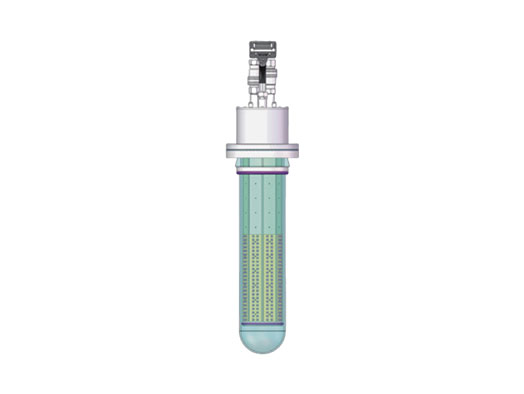
LED photochemical reaction vessel design technology refers to the engineering and optimization of vessels used in
light-driven chemical reactions powered by LED light sources. These systems are designed to deliver precise
wavelengths, uniform irradiation, controlled temperature, and safe operation for laboratory and industrial
photochemistry. In modern photochemistry, LED-based vessels are increasingly preferred because they offer higher
energy efficiency, longer service life, lower heat generation, and better wavelength selectivity than many
traditional light sources.
This guide provides a detailed, SEO-friendly overview of LED photochemical reaction vessel design technology,
including definitions, design principles, key benefits, material selection, common vessel structures, technical
specifications, and practical application considerations. The content is written for use in blog pages, category
pages, industry landing pages, and SEO content hubs. It focuses on general industry knowledge only and does not
include company recommendations.
An LED photochemical reaction vessel is a container or reactor chamber specifically engineered to support
photochemical reactions using LED illumination. These reactions depend on light energy to initiate or accelerate
chemical transformations such as photocatalysis, photoredox chemistry, polymerization, synthesis, oxidation,
reduction, and material modification.
Unlike ordinary glassware, a photochemical reaction vessel must manage light distribution, thermal stability,
chemical resistance, sealing performance, and mixing efficiency. In LED photochemical reaction vessel design
technology, the geometry and materials of the vessel are matched to the wavelength, intensity, and operating
conditions of the LED source to ensure reliable and repeatable results.
LED light sources have transformed photochemical processing because they provide narrow-band emission, stable output,
low energy consumption, and flexible wavelength options. Traditional mercury lamps and halogen lamps often generate
excessive heat, broader spectral output, and higher operational costs. In contrast, LED photochemical reaction vessel
design technology supports efficient light delivery with more controlled reaction conditions.
The ability to tune LED wavelengths makes it possible to match absorption profiles of specific photocatalysts,
dyes, and reagents. This improves reaction efficiency and selectivity while reducing unwanted side reactions.
Because LED systems typically produce less infrared heat, vessel design can focus more on optical performance and
less on heat shielding, although thermal management remains important.
Successful LED photochemical reaction vessel design depends on balancing optics, materials science, fluid dynamics,
and thermal engineering. The vessel must be transparent or transmissive at the selected wavelength, while also
maintaining structural integrity and chemical resistance.
The vessel should allow the maximum possible light transmission into the reaction zone. Wall thickness, curvature,
color, and surface finish all influence optical loss. Transparent or high-transmittance materials are often used
to minimize absorption and scattering.
Different photochemical reactions require different wavelengths, such as UV-A, blue, green, red, or near-infrared.
Vessel design must match the emission profile of the LED array and the absorption characteristics of the reaction
system. Proper wavelength matching increases efficiency and reduces wasted energy.
Non-uniform irradiation can lead to incomplete conversion, overexposure in some regions, and poor reproducibility.
Designers often use cylindrical, annular, or multi-face illumination structures to improve uniform exposure across
the full reaction volume.
Even though LEDs generate less heat than conventional lamps, localized heating can still occur. Reaction vessels may
include cooling jackets, heat-dissipating frames, airflow channels, or temperature monitoring ports to maintain
ideal operating conditions.
Photochemical reactions may involve organic solvents, oxidizers, acids, bases, or metal complexes. Vessel materials
must resist corrosion, cracking, clouding, and contamination over extended use.
Material selection is one of the most critical parts of LED photochemical reaction vessel design technology. The
choice depends on wavelength, solvent type, pressure rating, cleaning method, and desired service life.
| Material | Main Advantages | Typical Limitations | Common Applications |
|---|---|---|---|
| Borosilicate Glass | High transparency, good chemical resistance, widely available | Moderate UV transmission, fragile under impact | General photochemical laboratory vessels |
| Quartz Glass | Excellent UV transmission, high thermal resistance | Higher cost, more fragile than metal housings | UV photochemistry, high-precision reactions |
| PTFE / PFA Liners | Excellent chemical inertness, strong solvent resistance | Low structural rigidity, limited optical transparency | Corrosive or highly reactive systems |
| Stainless Steel Housing | Mechanical strength, pressure resistance, durability | Opaque, requires windows or internal inserts | Industrial and flow reactor structures |
| FEP / ETFE Components | Good chemical resistance, useful for tubing and windows | Temperature and pressure limits vary by grade | Auxiliary light-path and fluid components |
| Aluminum Heat-Sink Structures | Excellent thermal conductivity, lightweight | Requires surface protection in corrosive environments | LED mounting frames and cooling systems |
LED photochemical reaction vessel design technology includes several common structures, each with specific
advantages depending on the application. The reactor geometry affects light penetration, mass transfer, heat
removal, and scalability.
Batch vessels are among the most common designs in laboratory photochemistry. The reaction mixture is loaded into a
sealed vessel, irradiated for a set period, and then removed for analysis or downstream processing. Batch systems
are simple, flexible, and suitable for process development.
Flow vessels continuously pump reaction liquid through an illuminated chamber. These systems often improve
light-to-volume efficiency, temperature control, and reproducibility. LED-based flow photochemistry is especially
useful for scale-up and continuous manufacturing.
Annular designs place the reaction medium in a ring-shaped gap around or inside a light source. This geometry helps
distribute light more evenly and can improve photon absorption in higher-volume systems.
These vessels are designed for reaction screening, catalyst evaluation, and condition optimization. They allow
multiple small-scale reactions to be run under the same LED conditions for rapid comparison.
LED photochemical reaction vessel design technology delivers several major advantages across laboratory research,
process development, and industrial production.
| Advantage | Description | Value to Users |
|---|---|---|
| Energy Efficiency | LED systems convert electrical energy to light more efficiently than many traditional lamps | Lower operating costs and reduced power consumption |
| Wavelength Precision | LEDs emit narrow spectral bands with selectable wavelengths | Better catalyst matching and improved reaction selectivity |
| Lower Heat Output | Less unwanted infrared radiation than conventional light sources | Reduced thermal stress and easier temperature control |
| Long Service Life | LED modules often have long operational lifespans | Less replacement downtime and maintenance effort |
| Compact System Design | LED arrays can be integrated into compact vessel structures | Smaller footprint and easier laboratory integration |
| Improved Safety | Controlled light output and enclosed vessel designs reduce exposure risks | Safer operator environment and better process control |
| Scalability | LED vessel systems can be adapted from bench scale to production scale | Better pathway from research to commercial process |
When selecting or designing an LED photochemical reaction vessel, engineers and researchers evaluate multiple
technical parameters. These specifications influence performance, compatibility, and safety.
| Specification | Typical Range or Consideration | Why It Matters |
|---|---|---|
| Wavelength Range | UV-A, visible blue, green, red, or custom band | Must match reaction chemistry and photocatalyst absorption |
| Light Intensity | Low to high irradiance depending on scale | Determines reaction rate and conversion efficiency |
| Reaction Volume | Milliliters to liters or more | Defines throughput and scale category |
| Transmission Efficiency | Dependent on material, thickness, and geometry | Controls how much light reaches the reaction mixture |
| Temperature Control Range | Ambient to cooled or heated operation | Maintains reaction stability and selectivity |
| Pressure Rating | Atmospheric to elevated pressure, depending on structure | Important for sealed and continuous systems |
| Mixing Method | Magnetic stirring, mechanical stirring, recirculation, or flow | Improves mass transfer and irradiation uniformity |
| Material Compatibility | Must suit solvent, catalyst, and reagents | Prevents contamination and equipment damage |
The best LED photochemical reaction vessel design technology often includes several performance-enhancing features.
These details may seem small, but they can significantly affect reaction efficiency and reproducibility.
Temperature control is essential in photochemical systems because reaction kinetics, catalyst stability, and product
selectivity are often temperature-sensitive. Although LEDs are cooler than conventional lamps, the combined effect of
LED electronics, reaction exotherm, and ambient conditions can still raise temperature.
Common temperature management methods include air cooling, water jackets, circulating chillers, heat sinks, and
controlled reactor enclosures. In advanced systems, temperature sensors and feedback loops are used to maintain
stable conditions throughout the reaction period.
Optical engineering is at the heart of LED photochemical reaction vessel design technology. The goal is to ensure
that light reaches the active reaction zone in the most efficient way possible. Important factors include the angle
of incidence, distance between LED and vessel, wall clarity, refractive index, and reflection losses.
Designers may use simulation tools to model light paths, identify dark zones, and optimize vessel shape. In
high-performance systems, the optical design is combined with fluid simulation and thermal modeling to improve the
overall process.
Safety is a major concern in all photochemical systems, especially when using UV light, pressurized conditions, or
flammable solvents. LED photochemical reaction vessel designs should support safe handling, containment, and
operator protection.
LED photochemical reaction vessels are used across a wide range of industries and research fields. Their flexibility
makes them suitable for both discovery chemistry and process engineering.
| Application Area | Typical Use Case | Importance of LED Vessel Design |
|---|---|---|
| Organic Synthesis | Photoredox and visible-light transformations | Improves reaction control and selectivity |
| Pharmaceutical Research | Small-batch synthesis and route development | Supports reproducible process optimization |
| Polymer Science | Photopolymerization and curing | Ensures uniform curing and consistent material properties |
| Materials Chemistry | Surface modification and nanomaterial synthesis | Enables precise light-driven material control |
| Environmental Chemistry | Photodegradation and pollutant treatment research | Enhances treatment efficiency and testing reliability |
| Industrial Process Development | Scale-up and continuous photochemical processing | Supports throughput, safety, and consistent quality |
Compared with conventional light-driven reaction setups, LED photochemical reaction vessel systems offer clear
advantages in control, efficiency, and scalability.
| Feature | LED Photochemical Vessel | Traditional Lamp-Based System |
|---|---|---|
| Energy Use | Lower | Higher |
| Wavelength Control | High precision | Often broader and less selective |
| Heat Generation | Moderate to low | Often high |
| Maintenance | Generally lower | Often higher |
| Lifetime | Long operational life | Shorter in many cases |
| Process Stability | Strong, with stable emission | Can drift over time |
| Design Flexibility | Highly modular | Less adaptable in many setups |
Selecting the correct vessel depends on the chemistry, scale, and operational requirements. A good selection process
starts with identifying the target wavelength, solvent system, desired reaction volume, and control needs.
Proper maintenance helps preserve vessel performance and extends service life. Regular inspection should include
checks for cracks, clouding, seal wear, contamination, and LED alignment.
For SEO purposes, the following related keywords and phrases are commonly associated with this topic. These terms
can be used naturally in headings, body text, product pages, category pages, and technical blog articles.
LED photochemical reaction vessel design technology plays a central role in modern photochemistry by combining
optical precision, thermal control, chemical resistance, and scalable engineering. As LED light sources continue to
replace older illumination methods, vessel design becomes increasingly important for achieving consistent reaction
performance, higher efficiency, and safer operation.
Whether used in research laboratories, pilot plants, or industrial process development, a well-designed LED
photochemical reaction vessel improves irradiation uniformity, supports wavelength-specific chemistry, and enables
more reliable results. By understanding the principles, materials, structures, and technical specifications outlined
above, users can better evaluate and apply LED photochemical reactor solutions across a wide range of chemical
applications.
```
TAMBAH:bangunan 7, taman perindustrian Z Acer Z Hi, Lian Tang ave, bandar shanghu, nombor baris C, Jiangsu
Tel:0512-65560736 / 0512-65371556
mudah alih:+86 13584913897 / +86 13771738377 (Jualan)
e-mel:jkzdhsm@yeah.net
Laman web ini menggunakan kuki untuk memastikan anda mendapat pengalaman terbaik di laman web kami.
 English
 Español
 Pусский
 Deutsch
 日本語
日本語 한국어
한국어 हिन्दी
 Indonesia
 Tiếng Việt



 Whatsapp
 telefon
Komen
(0)