

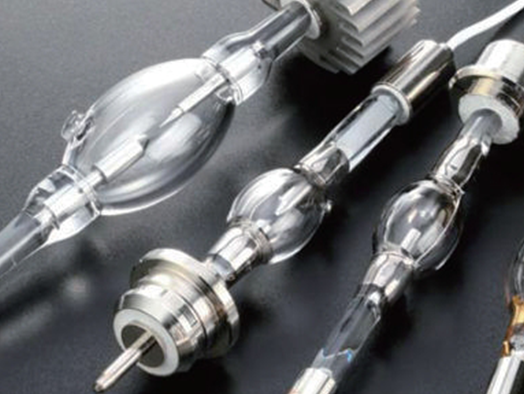
A photochemical reaction vessel for continuous chemical processing is a specialized reactor designed to support light-driven chemical transformations under a controlled, continuous-flow environment. It combines the principles of photochemistry and continuous processing to improve reaction efficiency, product consistency, safety, and scalability. In modern chemical manufacturing, photochemical reaction vessels are widely used for applications that require precise exposure to light, accurate temperature control, and stable residence time management.
This page provides industry-focused, SEO-friendly, and original content about the definition, working principles, core advantages, typical specifications, design considerations, applications, and selection criteria of photochemical reaction vessels for continuous chemical processing. The information below is general and does not include any company-specific recommendations.
A photochemical reaction vessel is a chemical processing unit that uses light energy to initiate or accelerate chemical reactions. In continuous chemical processing, the reaction vessel is configured so that reactants flow continuously through the system instead of being processed in batches. This allows the reaction to proceed in a steady-state manner, where product output is constant and process control is highly repeatable.
In simple terms, a photochemical reaction vessel for continuous chemical processing is a reactor where liquid or gas-phase reactants are exposed to controlled light sources while moving through a defined reaction zone. The vessel may be built from glass, quartz, fluoropolymer, stainless steel with optical interfaces, or other light-transmitting and chemically resistant materials depending on the target process.
The term is often associated with continuous flow photochemistry, where ultraviolet (UV), visible, or near-infrared light is used to drive transformations such as oxidation, reduction, isomerization, cycloaddition, halogenation, photopolymerization, and other light-assisted synthesis routes.
Continuous chemical processing has become increasingly important because it supports higher throughput, improved process reproducibility, and better process safety. When light-driven reactions are moved from batch vessels into continuous photochemical reaction vessels, manufacturers can gain more precise control over exposure time, photon delivery, mixing, and thermal management.
Traditional batch photochemistry often faces challenges such as uneven light penetration, scale-up difficulties, long reaction times, and inconsistent product quality. A photochemical reaction vessel for continuous chemical processing helps address these issues by reducing the reaction path length, increasing irradiation efficiency, and maintaining a uniform process environment.
The basic operating principle is straightforward: reactants enter the system, pass through an illuminated reaction zone, undergo a photochemical transformation, and exit as product stream. However, the actual performance depends on several interacting elements, including reactor geometry, light source intensity, wavelength selection, flow rate, residence time, mixing efficiency, and temperature control.
In most continuous photochemical systems, the reaction vessel includes the following functional components:
The vessel design is often optimized to minimize light loss and maximize photon utilization. Because many photochemical reactions are sensitive to overexposure or degradation, consistent light dose control is critical for product quality and yield.
The growing demand for photochemical reaction vessels in continuous processing is driven by a combination of performance, safety, and economic advantages. Below are the most important benefits.
| Advantage | Description | Process Impact |
|---|---|---|
| Improved Light Utilization | Thin reaction paths and optimized vessel geometry allow better light penetration. | Higher conversion efficiency and more consistent reaction outcomes. |
| Enhanced Temperature Control | Continuous systems can dissipate heat more effectively than large batch vessels. | Reduced thermal degradation and improved selectivity. |
| Better Safety | Smaller in-process inventory lowers the risk associated with hazardous intermediates. | Safer operation for sensitive or high-energy reactions. |
| Scalable Throughput | Output can be increased by adjusting flow rate, numbering-up, or operating time. | Flexible production scaling without major redesign. |
| Consistent Quality | Steady-state operation improves batch-to-batch reproducibility. | More uniform product specifications and reduced variability. |
| Reduced Reaction Time | Efficient irradiation and mixing often shorten the overall process duration. | Higher productivity and lower operating time. |
| Lower Waste Generation | Precise process control helps minimize by-products and off-spec material. | Improved sustainability and lower purification burden. |
A photochemical reaction vessel for continuous chemical processing can be used across many sectors of the chemical industry. Its flexibility makes it suitable for both research and commercial-scale workflows where controlled photoreactivity is important.
Material selection is one of the most important aspects of photochemical reactor design. The vessel must withstand chemical exposure, temperature variation, pressure changes, and light irradiation without compromising performance.
| Material | Main Characteristics | Typical Use |
|---|---|---|
| Quartz | Excellent UV transmission, high thermal stability, strong optical clarity. | UV photochemistry and high-purity applications. |
| Borosilicate Glass | Good chemical resistance, moderate optical transmission, economical. | Laboratory and pilot-scale photochemical vessels. |
| Fluoropolymer | Strong resistance to corrosive chemicals, flexible design options. | Harsh chemical environments and specialized flow systems. |
| Stainless Steel with Optical Windows | Mechanical durability and pressure resistance with localized light access. | Industrial continuous processing under demanding conditions. |
| PTFE / PFA Components | High chemical inertness and low contamination risk. | Corrosive media and high-purity process lines. |
A well-designed photochemical reaction vessel for continuous chemical processing should support efficient irradiation, stable flow behavior, and predictable reaction kinetics. The following design features are commonly considered during selection and engineering.
Continuous photochemical reactors differ significantly from conventional batch reactors. The main differences are related to process control, reaction environment, and scalability. The table below highlights the contrast.
| Aspect | Photochemical Continuous Reaction Vessel | Conventional Batch Reactor |
|---|---|---|
| Operation Mode | Continuous feed and discharge | Charge, react, then discharge |
| Light Exposure | Controlled and uniform irradiation | Often uneven due to depth and geometry |
| Heat Management | Typically more efficient and responsive | May require longer cooling times |
| Scale-Up | Often achieved by numbering-up or flow optimization | Scale-up can be complex and less predictable |
| Safety | Smaller volume in process at any moment | Larger inventory and greater risk exposure |
| Product Consistency | High repeatability under steady-state conditions | May vary between batches |
To achieve reliable performance, operators must control several operating parameters. These variables directly influence conversion, selectivity, throughput, and energy efficiency.
| Parameter | Function | Why It Matters |
|---|---|---|
| Wavelength | Determines which photoreactive species can absorb energy. | Correct wavelength selection is essential for reaction initiation. |
| Light Intensity | Controls the photon flux delivered to the reaction mixture. | Affects reaction rate and conversion efficiency. |
| Flow Rate | Sets the speed of material passing through the reactor. | Directly influences residence time and productivity. |
| Residence Time | The duration reactants remain in the illuminated zone. | Critical for complete and selective conversion. |
| Temperature | Regulates thermal behavior during irradiation. | Impacts side reactions, stability, and yield. |
| Concentration | Defines the amount of reactant in the feed stream. | Influences absorption, kinetics, and process economics. |
| Optical Path Length | Distance light travels through the reaction medium. | Short path lengths often improve irradiation efficiency. |
When creating content for a photochemical reaction vessel for continuous chemical processing, it is helpful to organize the page around high-intent search themes. Common keyword variations include continuous photochemical reactor, photochemical flow reactor, light-assisted reaction vessel, UV reaction vessel, continuous flow photochemistry system, and photoreactor for chemical processing.
From an industry perspective, readers often search for definitions, working principles, advantages, applications, and technical specifications. Including structured sections, tables, and clear keyword usage can improve readability and help search engines understand the relevance of the page. For this reason, pages centered on photochemical reaction vessels should combine technical clarity with concise semantic structure.
The following table provides a general overview of typical specification ranges for a photochemical reaction vessel used in continuous chemical processing. Actual values vary based on process scale, material selection, target reaction, and system configuration.
| Specification | Typical Range / Option | Notes |
|---|---|---|
| Reactor Type | Coil, tubular, plate, annular, microchannel | Geometry affects light exposure and residence time. |
| Operating Mode | Continuous flow | Designed for steady feed and continuous product collection. |
| Light Source | UV lamp, LED, visible light module | Selected according to photochemical requirements. |
| Wavelength Range | Commonly 200–700 nm | Depends on reaction chemistry and absorptive species. |
| Pressure Rating | Atmospheric to moderate pressure | Higher-pressure designs may be used for specialized applications. |
| Temperature Range | Ambient to controlled elevated or cooled operation | Thermal control is process-dependent. |
| Flow Rate | Laboratory to industrial scale | Determined by reactor size and desired throughput. |
| Residence Time | Seconds to hours | Shorter times are common in intensified systems. |
| Construction Material | Quartz, glass, fluoropolymer, stainless steel | Must match chemical and optical requirements. |
| Control System | Manual or automated PLC-based control | Automation improves repeatability and monitoring. |
Choosing the right photochemical reaction vessel for continuous chemical processing requires a balance of process performance, safety, and operational simplicity. The following factors are typically evaluated during system design and procurement.
For industrial users, the value of a photochemical reaction vessel extends beyond basic reaction performance. It can contribute to leaner production, better process economics, and a stronger sustainability profile. Continuous photochemical processing may reduce solvent usage, shorten production cycles, and minimize the need for extensive post-processing.
In addition, the steady-state nature of continuous flow supports easier process analytics and more stable quality assurance. This is especially important in regulated industries or in the production of high-value compounds where process traceability and reproducibility are critical.
Although photochemical reaction vessels offer many advantages, they also present some technical challenges. These challenges are usually addressed through thoughtful engineering and process optimization.
| Challenge | Typical Cause | Common Solution |
|---|---|---|
| Limited Light Penetration | High absorbance or large reactor depth | Use narrow channels, improved optics, or higher-efficiency light sources. |
| Heat Buildup | High irradiation intensity or exothermic reaction | Implement cooling jackets, heat exchangers, or reduced feed concentration. |
| Fouling or Deposition | By-product formation or particulate solids | Adjust chemistry, improve cleaning protocols, or redesign flow paths. |
| Inconsistent Conversion | Flow instability or poor mixing | Use better pumping control and optimized mixing design. |
| Scale-Up Complexity | Changes in optical path and photon distribution | Adopt numbering-up strategies or modular reactor architecture. |
The future of photochemical reaction vessels for continuous chemical processing is closely tied to advances in LED technology, reactor miniaturization, automation, and process analytics. As light sources become more efficient and tunable, photochemical systems can be designed with greater precision and lower energy consumption.
Another major trend is the integration of digital control, inline monitoring, and data-driven optimization. These developments support real-time process adjustment and predictive performance management. Modular and scalable reactor platforms are also expected to remain important because they allow manufacturers to expand capacity without redesigning the entire process line.
Sustainability is another major driver. Continuous photochemical processing can help reduce waste, improve atom economy, and support greener manufacturing strategies. As a result, photochemical reaction vessels are likely to play an increasingly important role in next-generation chemical production systems.
A photochemical reaction vessel for continuous chemical processing is an essential tool for modern light-driven manufacturing. By combining controlled irradiation, continuous flow, efficient heat management, and precise residence time regulation, it enables safer, more scalable, and more consistent chemical production. Whether used in research, pilot projects, or industrial workflows, this type of reactor offers strong advantages in reaction efficiency, process control, and product quality.
For businesses, laboratories, and process developers searching for a reliable photochemical reactor concept, understanding the definition, advantages, specifications, and selection criteria is the first step toward successful implementation. Continuous photochemical processing is not only a technical solution but also a strategic approach to improved productivity and sustainable chemical manufacturing.
TAMBAH:bangunan 7, taman perindustrian Z Acer Z Hi, Lian Tang ave, bandar shanghu, nombor baris C, Jiangsu
Tel:0512-65560736 / 0512-65371556
mudah alih:+86 13584913897 / +86 13771738377 (Jualan)
e-mel:jkzdhsm@yeah.net
Laman web ini menggunakan kuki untuk memastikan anda mendapat pengalaman terbaik di laman web kami.
 English
 Español
 Pусский
 Deutsch
 日本語
日本語 한국어
한국어 हिन्दी
 Indonesia
 Tiếng Việt



 Whatsapp
 telefon
Komen
(0)